
Dental Implants: A Guide to Your Tooth-Replacement Options
Understand dental implant parts, replacement options, candidacy, grafting, treatment stages, costs, and the questions to bring to your consultation.
If you are missing a tooth, a dental implant is one of the most common ways to replace it. This guide walks you through how implants work, what your options are, and what to ask before you commit to surgery.
Each section links to a more detailed article if you want to go deeper on that topic.
What Is a Dental Implant?
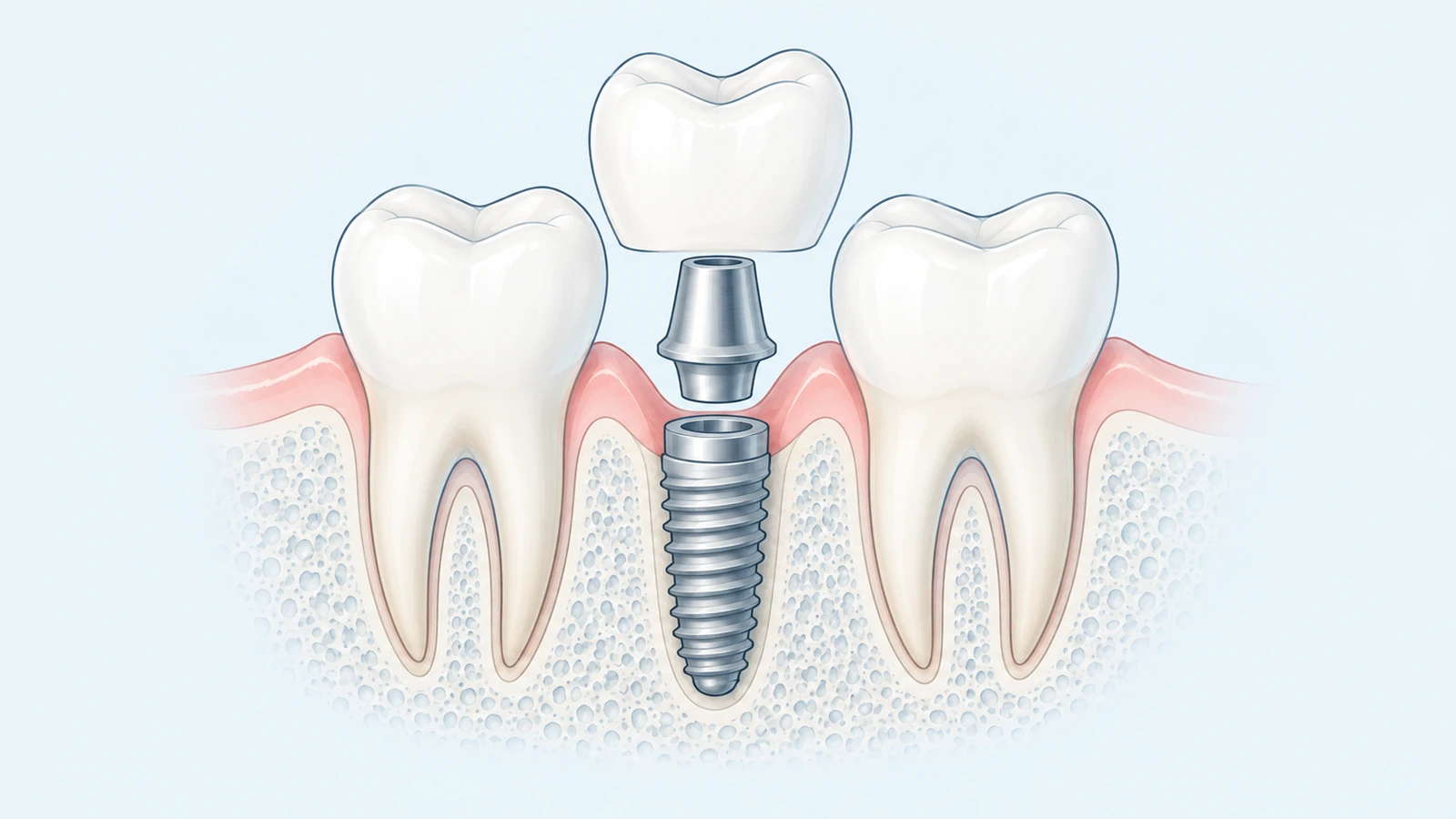
A dental implant is a device placed in your jawbone to support a replacement tooth or teeth. In a single-tooth restoration, the implant supports an abutment and a crown. The implant is below the gum, while the crown is the tooth-shaped part you see when you smile. The FDA explains the components and their roles.
Keep in mind, people use the word “implant” two ways. Sometimes it means the whole replacement tooth. On an estimate, it often means only the post placed during surgery. Ask which one your plan is talking about.
For example, replacing one missing molar usually means the oral surgeon places the implant, and your regular dentist makes the crown at a separate visit.
Question to Answer: When your treatment plan says “implant,” does it include the implant body, abutment, and final crown?
Which Tooth-Replacement Options Use Implants?
An implant-supported restoration can replace one tooth, several teeth, or a larger group of missing teeth. Your final restoration might be a crown, a bridge, or a denture. The American Academy of Periodontology describes these treatment categories.
One missing tooth is a simpler plan than several. If the gap is in the front, ask about a temporary tooth while the implant heals. If you are missing several back teeth, ask how the new teeth will hold up to chewing and how you will clean around them.
For larger cases, ask whether the new teeth will be fixed or removable. Fixed teeth stay in and only your dentist can take them out. Removable teeth snap onto the implants and you take them out to clean.
Question to Answer: Are you comparing a single crown, an implant-supported bridge, or a denture, and will your restoration be fixed or removable?
How Do Implants Compare With Bridges and Dentures?
Implants are one option among several ways to replace missing teeth. A conventional bridge uses neighboring teeth for support, while a removable denture can replace a group of teeth. An implant-supported bridge or denture combines elements of those approaches. The ADA outlines the main tooth-replacement choices.
The right choice depends on your mouth. If the teeth next to the gap already need crowns, a bridge can make sense. If they are healthy, an implant leaves them alone. Bone, health, and how much upkeep you want all factor in.
Tell your surgeon what matters most to you, whether that is avoiding surgery, protecting your other teeth, or keeping cost down. Our implant, bridge, and denture comparison gives you a way to organize those questions.
Question to Answer: Which tradeoffs matter most to you when comparing surgery, support, maintenance, and total treatment cost?
What Determines Whether You Are a Candidate?
Most healthy adults are candidates. Your surgeon looks at your gums, how much bone you have, your medical history, and whether you smoke. The AAP explains the role of healthy gums and adequate bone.
Sometimes something else needs to be handled first, like gum disease or a failing tooth next door. If so, your surgeon will tell you what and in what order.
Our dental implant candidacy guide explains how to prepare for this discussion. Bring a complete health history, even if a condition seems unrelated to your teeth.
Question to Answer: Which medical or dental findings does your team need to understand before recommending implant care?
Where Does Bone Grafting Fit?
An implant needs enough bone around it. If the bone has thinned out, a graft builds it back up, either before the implant or at the same visit. Plenty of patients do not need one at all.
The AAOMS explains why bone preservation matters after tooth loss. If a tooth has not yet been removed, ask about replacement planning before the extraction. That gives your team an opportunity to discuss the site and the sequence rather than treating each appointment as an unrelated event.
If you do need a graft, ask why, what material will be used, how long it takes to heal, and how it changes the cost. Read our bone grafting resource for a more detailed checklist.
Question to Answer: If a graft is recommended, what problem is it intended to address in your implant site?
What Happens During Treatment?
Here is the usual order: consultation, implant placement, a few months of healing, then the final tooth. In some cases steps can be combined. The ADA describes the placement, healing, and restoration phases.
Ask for the plan in writing, with who does each step. It makes it a lot easier to plan time off work and rides home.
Use our treatment planning guide to organize the process. For a closer look at timing, read how long dental implant treatment takes.
Question to Answer: Can you explain the proposed order of your appointments and what determines when each stage can begin?
What Should You Know About Costs and Risks?
Get an estimate that covers both the surgery and the final tooth. Check whether extractions, grafting, anesthesia, and temporary teeth are included or extra. The AAOMS identifies these as important implant cost factors.
Like any surgery, implants carry some risk, including infection, an implant that does not bond with the bone, and injury to nearby teeth or nerves. Ask what happens if something goes wrong. The FDA patient guide describes benefits and risks.
Our cost guide helps you compare estimates that may otherwise look similar but include different services.
Question to Answer: Do you understand both the total proposed cost and the complications your team wants you to consider?
What Happens After the Final Tooth Is Placed?
Once the final tooth is in, the job shifts to keeping it clean. Ask your dentist to show you how to clean around your specific crown, bridge, or denture. The AAP explains why implants require ongoing home care and professional visits.
Keep a copy of your implant records. If you ever move or switch dentists, the new office will want to know what brand and size of implant you have. Our implant care resource covers the questions to revisit over time.
Question to Answer: Who will monitor your implant and restoration, and do you know how to clean around them?
In Summary
The main takeaway is that an implant is a plan, not a single appointment. Start with a consultation, bring your questions, and leave with a written plan that covers each step and its cost.
You can learn about dental implant consultations at Perimeter or contact the office to arrange a visit.
Question to Answer: What is the first question you want your dental team to answer about replacing your missing tooth or teeth?


