Dental Implants vs. Bridges and Dentures: How to Compare Your Options
Compare dental implants, bridges, and dentures by support, neighboring teeth, treatment sequence, cleaning, and the complete cost of care.

Implants, bridges, and dentures all replace missing teeth, but they work very differently. Here is how they compare on support, upkeep, and cost.
There is no single best option. The right one depends on the health of the teeth around the gap and what matters most to you.
How the Replacement Is Supported
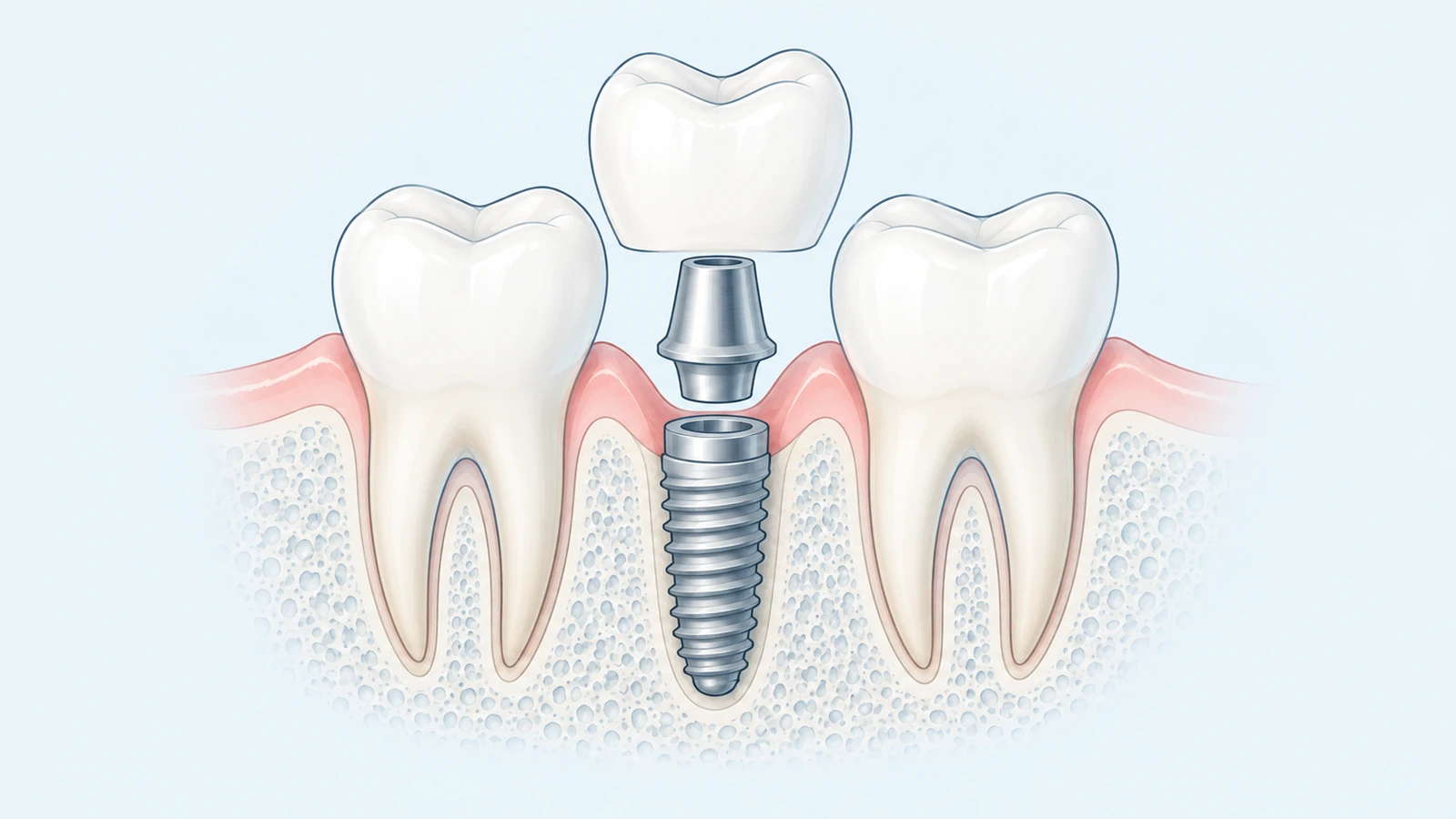
A conventional bridge spans a gap and attaches to neighboring teeth. An implant-supported restoration attaches to implants placed in the jaw. A conventional removable denture rests on supporting tissues and may use remaining teeth for retention. The ADA describes bridges and removable dentures.
These can overlap. An implant-supported bridge is still a bridge, and a denture can snap onto implants. Ask whether your new teeth stay in or come out.
Replacing one molar is a very different conversation from replacing a full arch. Our implant guide explains the components and terminology.
Question to Answer: What will support your proposed replacement, and will it be fixed or removable?
What Happens to the Neighboring Teeth?
A tooth-supported fixed bridge generally involves preparing adjacent teeth to support it. A single implant-supported crown can replace a missing tooth without using those adjacent teeth as bridge anchors. The AAP explains this distinction.
This is where the neighboring teeth matter. If they are healthy, an implant leaves them alone. If they already have big fillings or need crowns anyway, a bridge can make more sense.
With a bridge, ask what happens if one of the supporting teeth has a problem later. With an implant, ask if the spot needs a bone graft first.
Question to Answer: How would each option affect the teeth beside your gap, given their current condition?
Where Does Surgery Enter the Plan?
An implant requires surgery. A regular bridge or denture does not, though you may still need other work done first.
If you go the implant route, ask about anesthesia and whether you need a graft. A plan with grafting takes longer than one without. Our treatment planning guide gives you a way to map those steps.
If you would rather avoid surgery, say so. Your surgeon should explain why they recommend what they do and what your other options are.
Question to Answer: Which appointments and procedures would be required for each option you are considering?
How Will You Clean the Replacement?
Each option is cleaned differently. A bridge needs a floss threader to get underneath. A denture comes out to be cleaned. An implant is brushed and flossed much like a natural tooth.
Ask your dentist to show you on a model. If arthritis, eyesight, or anything else makes cleaning hard, bring it up during planning.
The AAP notes the need for daily care and professional monitoring around implant restorations. Our implant care guide helps you organize the follow-up questions.
Question to Answer: Can you comfortably perform the cleaning routine recommended for each design?
How Should You Compare Costs?
Compare full plans, not just the first number you see. Check whether temporary teeth, the final teeth, and follow-up are included. With implants, you will usually get one estimate from the surgeon and one from your dentist.
Keep in mind, the cheapest option today is not always the cheapest over 10 or 15 years. Ask what repairs or replacements each option tends to need down the road. Our implant cost guide provides an estimate worksheet.
Check your insurance for each option. Many plans cover bridges and implants differently.
Question to Answer: Are you comparing complete plans, or amounts that include different services?
How Do You Choose a Useful Next Step?
Here is a simple way to decide. Make a sheet with four columns: what holds it in, how many visits, daily care, and cost. Fill it in for each option as your dentist and surgeon explain them.
Ask why they recommend one option for your mouth specifically. A good answer points to something real, like the health of the neighboring teeth or the bone at the implant site.
You can also ask what happens if you wait. There is no reason to feel rushed, but bone can shrink over time where a tooth is missing.
Question to Answer: What finding in your evaluation most strongly supports the recommended option?
In Summary
The main takeaway is that each option fits a different situation. Look at the health of your other teeth, how much upkeep you want, and the long-term cost, then talk it through at a consultation.
If you are exploring surgical tooth replacement, learn about Perimeter’s dental implant consultations.
Question to Answer: Which comparison still needs an answer before you feel ready to choose your next step?