How to Care for Dental Implants: Cleaning, Follow-Up, and Long-Term Maintenance
Build an implant maintenance routine, understand professional follow-up, and learn which gum changes or loose components to report to your team.

An implant cannot get a cavity, but the gum and bone around it can still get infected. Taking care of it is a lot like taking care of a natural tooth, with a few differences.
How you clean it depends on what is on top of the implant. A single crown, a bridge, and a snap-on denture are each cleaned a little differently.
Start With Your Specific Restoration
Start by knowing what you have. Ask your dentist to show you the spots that are easy to miss on your specific crown, bridge, or denture.
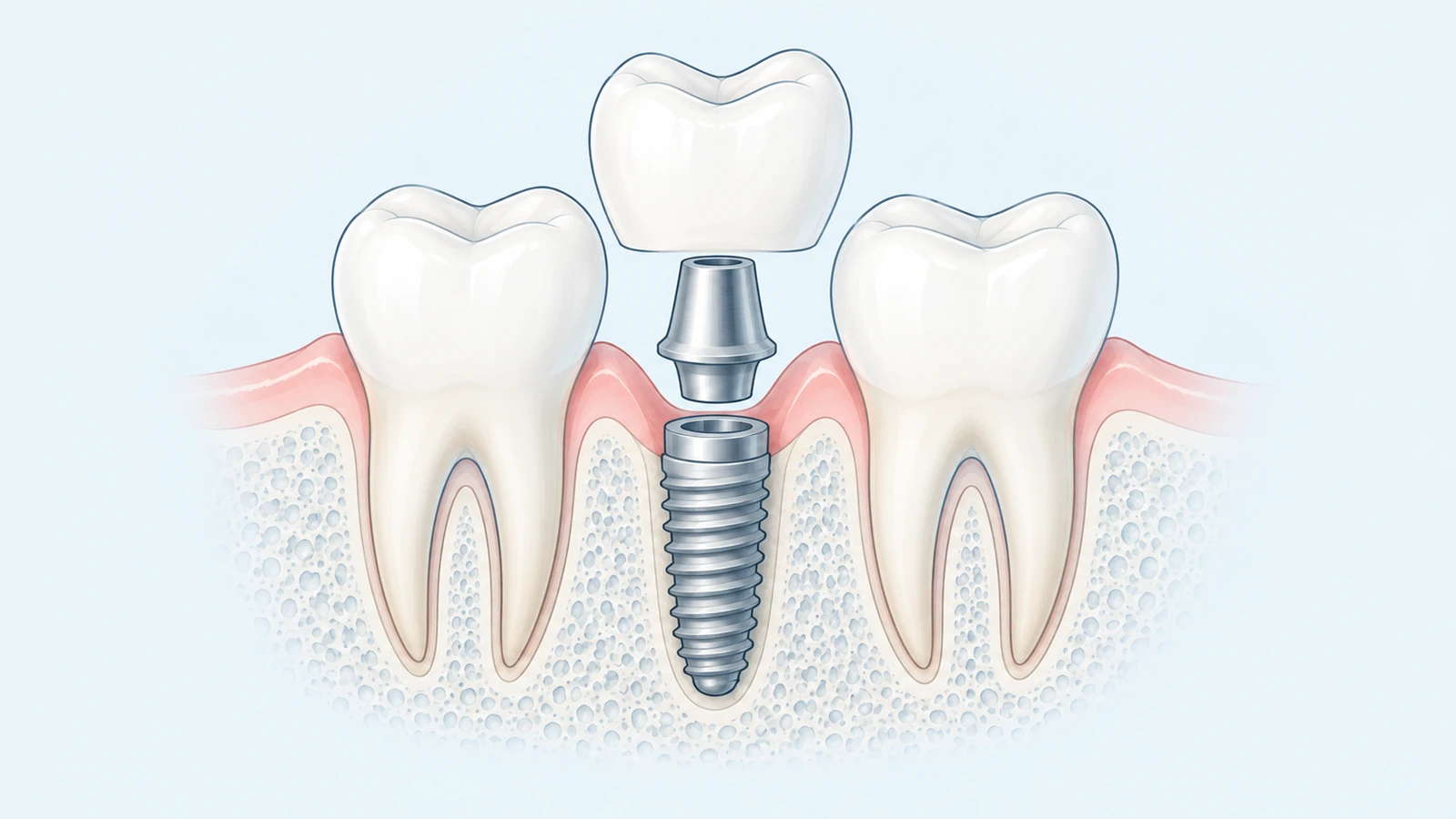
The AAP describes several types of implant-supported replacement. Our main implant guide also explains the difference between the supporting implant and the visible restoration.
If arthritis, eyesight, or the shape of the teeth makes cleaning hard, tell your dentist. A water flosser or a different brush can make a big difference.
Question to Answer: Can you identify the gumline and spaces that need cleaning around your actual restoration?
Ask for a Home-Care Demonstration
Brush twice a day with a soft brush, especially along the gumline. Clean between or under the teeth once a day with floss, a floss threader, or a small interdental brush. You do not need products labeled “for implants.”
The AAP emphasizes brushing, flossing, and professional monitoring around implants. Bridges and full-arch teeth need extra attention underneath.
Not sure you are doing it right? Bring your brush and floss to your next cleaning and ask the hygienist to watch.
Question to Answer: Have you practiced the cleaning method with your team and confirmed that you can reach the required areas?
Keep Professional Follow-Up on the Calendar
Keep up with regular cleanings at your dentist, usually every six months. Your dentist checks the gums and bite around the implant at those visits.
Mention anything you have noticed since your last visit, even small things.
Our treatment planning guide covers long-term care too. If no one explained it to you, ask at your next visit.
Question to Answer: Who is monitoring your implant and restoration, and when is your next visit due?
Which Gum Changes Should You Report?
Red, tender, or bleeding gums around an implant are a warning sign. The AAP describes inflammation around implants and its possible progression to supporting bone involvement.
The early stage is called peri-implant mucositis, and it is usually reversible with better cleaning. If it spreads to the bone, it is called peri-implantitis, which is more serious.
If you notice bleeding or redness that does not go away in a week or so, call your dentist instead of waiting for your next cleaning.
Question to Answer: Have you reported new bleeding, redness, tenderness, or another change around your implant?
What If a Component Feels Loose or Different?
If the tooth feels loose, hurts, or your bite feels off, call your dentist. The FDA specifically recommends reporting looseness or pain promptly.
Most of the time it is the crown or a small screw, not the implant itself. The AAOMS discusses prosthetic complications and implant-related failure. You need an examination to identify the cause.
Do not try to glue or fix it yourself. Call the office and describe what is happening.
Question to Answer: Do you know which provider to contact if your replacement feels loose or your bite changes?
How Long Can Implants Last?
Implants are built to last a long time, often decades, but nothing is guaranteed. The implant itself usually outlasts the crown on top, which may need to be replaced someday.
The AAOMS explains that implant problems can occur early or after treatment has been functioning. That is why regular checkups matter, but a problem does not automatically mean the implant has failed.
Ask for a record of the implant brand and size. If you move or change dentists, the new office will need it to find matching parts.
Question to Answer: Do you have the implant and restoration records you would need if you changed providers?
In Summary
The main takeaway is that implant care is simple: brush, clean between the teeth every day, keep up with your cleanings, and call if something changes. Do that and your implant has a great chance of lasting for decades.
If you are still considering treatment, read our implant guide and discuss maintenance during your consultation.
Question to Answer: What change would make your daily cleaning or professional follow-up more consistent?