
Socket Preservation After Tooth Extraction: Bone Grafting and Implant Planning
Understand socket preservation, graft materials and membranes, follow-up, and how extraction-site bone grafting differs from dental implant placement.
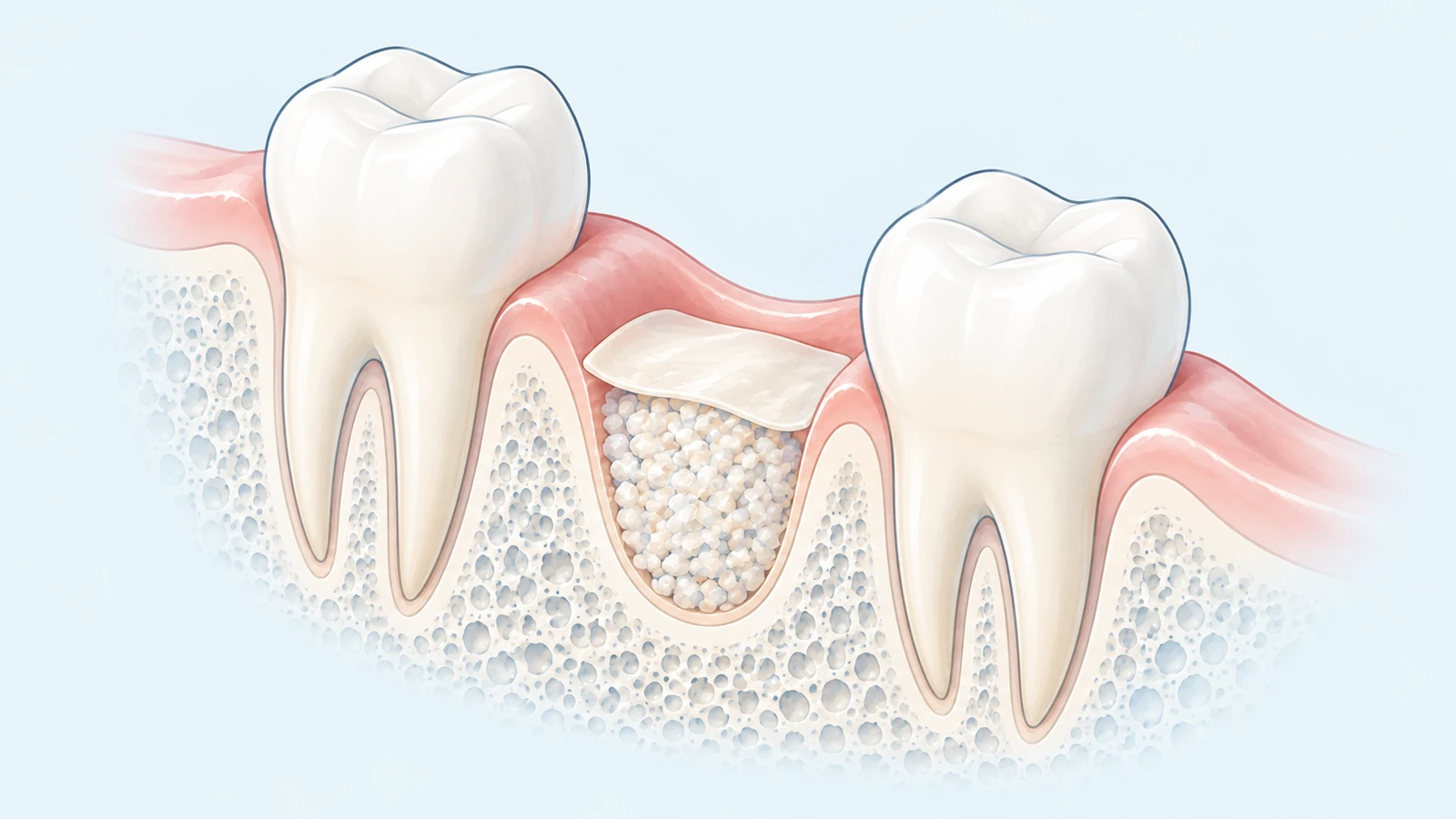
Socket preservation is a small bone graft placed right after a tooth is pulled. It helps keep the bone from shrinking while you decide how to replace the tooth.
Here is when it makes sense, how it differs from an implant, and what to ask before your extraction. Our broader bone grafting for dental implants guide covers other reasons grafting may be part of care.
1. Understand What Changes After a Tooth Is Removed
The socket is the hole in the jawbone where the roots used to be. After an extraction, the bone around it shrinks as it heals, getting thinner and shorter. That can make an implant harder to place later.
A graft fills the socket and slows that shrinking. Not every extraction needs one, and it does not keep the bone exactly as it was, but it helps a lot.
The AAOMS bone preservation resource explains how tooth loss affects the bone in more detail.
Question to Answer: How could changes at your extraction site affect the replacement option you are considering?
2. Discuss the Replacement Plan Before the Extraction
If there is any chance you will want an implant, tell your surgeon before the tooth comes out. Also mention whether you need a temporary tooth in the meantime.
Even if you are torn between an implant and a bridge, a graft keeps the implant option open.
Before the extraction, make sure you know who is pulling the tooth, who checks the healing, and who makes the final tooth. Our dental implant treatment planning guide explains how those stages connect.
Question to Answer: What is your proposed tooth-replacement plan, and have your surgeon and restorative dentist coordinated it?
3. Learn What Graft Materials and Membranes Do
Graft material can come from your own bone, processed donor bone, an animal source, or a synthetic material. If you have personal or religious preferences, mention them before the procedure.
A thin membrane is often placed over the graft to protect it. Most dissolve on their own, but some need to be removed. You may also have a few stitches.
You do not need to research graft brands. Just ask what material your surgeon uses and why. AAOMS explains grafts and membranes in its patient education resource.
Question to Answer: What material and covering are proposed for your site, and do they require any later removal?
4. Distinguish a Socket Graft From an Implant
A socket graft is not an implant. The graft holds the bone in place. The implant is a separate step, usually a few months later.
In most cases, the graft heals for three to four months, your surgeon checks it, and then the implant goes in. Sometimes the implant can go in at the time of extraction instead.
The American Academy of Periodontology describes ridge modification as a different type of graft for bone that has already shrunk. That is a bigger procedure than socket preservation.
Question to Answer: Which procedures are included in your current appointment, and which would occur later?
5. Ask How Healing Will Be Assessed
The gum will look healed long before the bone is ready. Your surgeon uses an X-ray to check the bone before planning the implant.
Expect a quick check a week or two after the extraction, then another visit a few months later to see if the site is ready.
If the timing changes, ask why. Healing times are estimates, not guarantees. Keep the dental implant timeline guide handy for planning.
Question to Answer: What will your team assess before recommending the next treatment stage?
6. Prepare for Aftercare and Follow-Up
Your instructions after a graft are a little different from a regular extraction. Do not brush directly on the site, pull at the stitches, or rinse hard until your surgeon says it is okay.
Be honest about smoking or vaping. Nicotine slows bone healing, and your surgeon needs to know to plan around it.
The AAOMS oral surgery aftercare resource covers rest, food, and cleaning during healing. Call us for bleeding that will not stop, pain or swelling that gets worse, or a fever. For trouble breathing or swallowing, call 911.
Question to Answer: Do you understand how to care for your particular graft and when to contact the office?
7. Compare the Complete Estimate and Alternatives
Check that your estimate lists the extraction, graft, membrane, anesthesia, and follow-up visits. Keep in mind, this is not the cost of the implant itself.
Ask your insurance company whether they cover bone grafts. Some plans cover the extraction but not the graft.
You can also ask what happens if you skip the graft or wait. Read our implant cost factors guide for questions about comparing complete estimates.
Question to Answer: Can you identify the procedures, providers, and fees included in the plan you are reviewing?
In Summary
The main takeaway is that if you might want an implant, the time to plan for it is before the tooth comes out. A quick graft at the extraction can save you a bigger procedure later. Talk it through at a bone grafting consultation with Dr. Ryan Chaliff in Dunwoody.
Question to Answer: What is the specific purpose of socket preservation in your plan?


