
Simple vs. Surgical Tooth Extraction: What to Expect
The difference between a simple and surgical extraction, how to plan for the space afterward, what recovery looks like, and when to call.
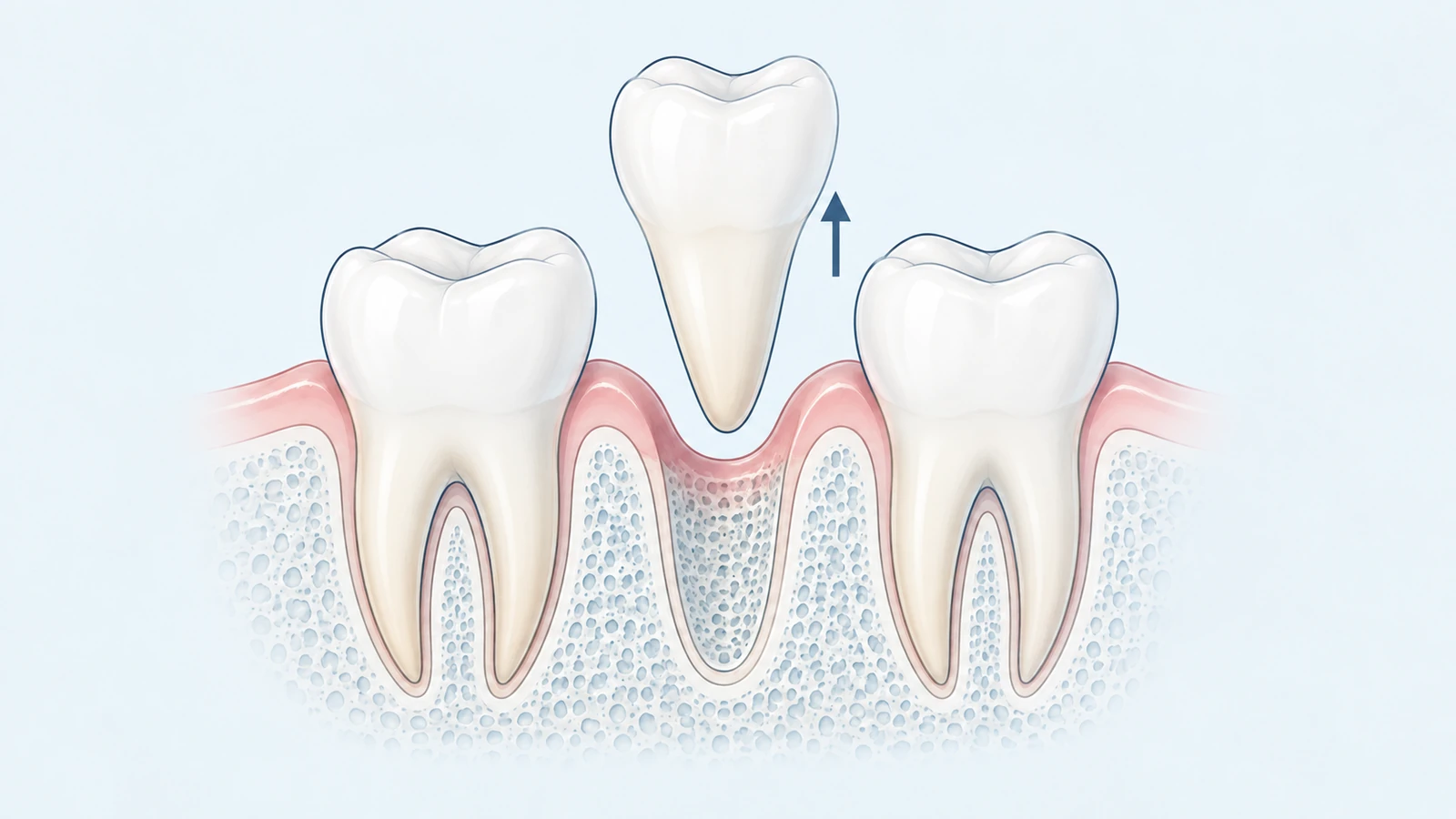
If your dentist says a tooth needs to come out, the next question is usually how hard it will be. The answer depends on whether you need a simple or a surgical extraction. Here is the difference and what to expect.
1. Why a Tooth Needs to Come Out
The most common reasons are a crack that goes below the gumline, decay too deep to repair, an infection that a root canal cannot fix, or a wisdom tooth with nowhere to go. Sometimes teeth are removed to make room for braces.
If you are not sure the tooth really needs to come out, ask. Sometimes a root canal or crown can save it.
Question to Answer: Has anyone explained why your tooth cannot be saved?
2. What a Simple Extraction Is
A simple extraction is for a tooth you can see that is still in one piece. The area is numbed, the tooth is gently loosened, and it is removed. No cuts in the gum are needed.
Most simple extractions take only a few minutes once you are numb.
Question to Answer: Is your tooth fully visible and in one piece?
3. What a Surgical Extraction Is
A surgical extraction is for a tooth that is broken off at the gumline, has a leftover root, or is stuck under the gum or bone. The surgeon may make a small opening in the gum or divide the tooth into pieces so each part comes out easily.
It sounds like more than it is. With good anesthesia, you feel pressure but not pain. A few dissolving stitches are common.
Question to Answer: Does your X-ray show a broken tooth, a leftover root, or an impacted tooth?
4. Plan for the Space Before the Tooth Comes Out
If you might want an implant later, say so before the extraction. A bone graft placed in the empty socket can keep the bone from shrinking while you heal. Our socket preservation guide explains how it works.
Wisdom teeth do not need to be replaced. For other teeth, the gap can cause neighboring teeth to drift over time.
Question to Answer: Do you want to keep the option of an implant open?
5. Recovery in the First Week
Bite gently on gauze for the first hour or so. Expect some soreness and swelling for two to three days. Stick to soft foods and chew on the other side.
Do not smoke, spit hard, or use a straw for the first few days. Those can pull the blood clot out of the socket and cause a dry socket. Most people are back to work the next day after a simple extraction and within a few days after a surgical one.
Question to Answer: Do you have soft food and a few quiet days planned?
6. When to Call the Office
Call us if bleeding will not slow down, if pain gets worse after day three, if swelling keeps increasing, or if you run a fever. A deep, throbbing pain a few days after surgery is often a dry socket, and it is very treatable. If you have trouble breathing or swallowing, call 911.
Question to Answer: Do you have the office number saved?
In Summary
The main takeaway is that a simple extraction is quick and straightforward, and a surgical extraction is a little more involved but still very routine for an oral surgeon. Plan for the space before the tooth comes out, follow your aftercare, and call if things get worse instead of better. Learn more about tooth extractions with Dr. Chaliff.
Question to Answer: Which kind of extraction does your X-ray point to?


